Blog

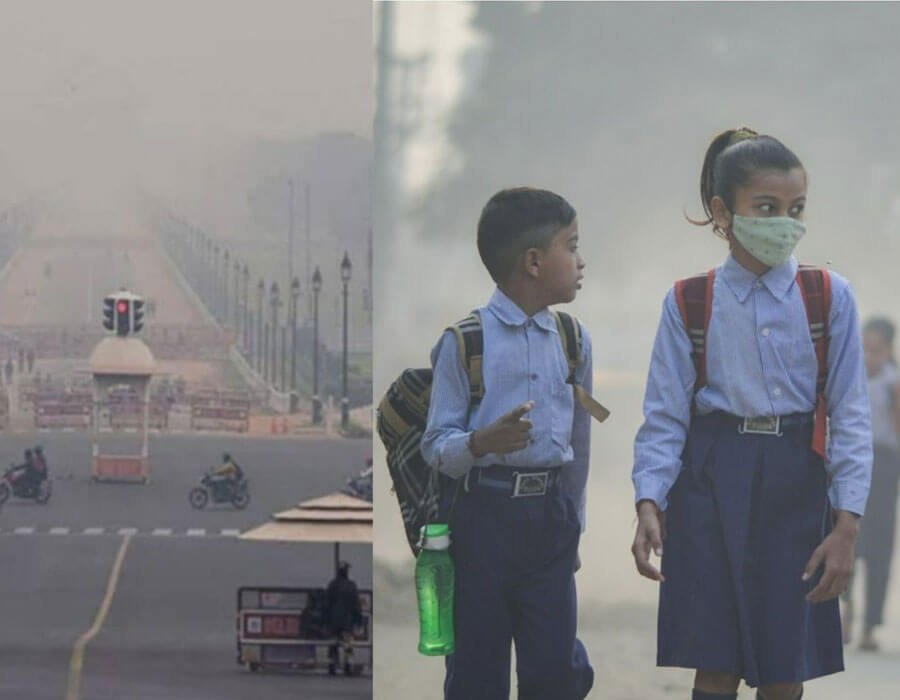
  • OFF-The-chart pollution of delhi & its health impacts

    OFF-The-chart pollution of delhi & its health impacts

    Delhi has recently been referred to as a “gas chamber” by its Chief Minister, Arvind Kejriwal. The air quality of the capital & its neighboring areas i.e., Noida & Gurugram has become severe and reached such an abnormally high level that it’s equivalent to smoking 25 cigarettes a day. The presence of eight air pollutants are considered to evaluate the air quality index (PM10, PM2.5, NO2, SO2, CO, O3, NH3, and Pb). PM 2.5 can easily cross the body’s defense mechanism of coughing, sneezing, or swallowing and get deep into the respiratory tract, entering our lungs and bloodstream. Air pollution has adverse health impacts:

    Are you facing respiratory issues?

    The direct impacts air pollution has on the human body is on respiration and it attacks the lungs.

    Studies have shown that air pollution causes all of the below-mentioned medical issues:

    1. Upper respiratory symptoms
    2. Lower respiratory symptoms: Dry cough, wheezing, breathlessness, chest discomfort.
    3. Asthma
    4. Reduced lung function
    5. Restrictive, obstructive as well as combined lung function deficits
    6. Metaplasia & dysplasia of airway epithelial cells
    7. Cytological changes in sputum
    8. Chronic obstructive airway disease, COPD, COAD
    9. Respiratory morbidity

    Facing health impacts other than respiratory disorders?

    It doesn’t only affect the lungs and respiration. Several non-respiratory effects are associated with the adverse impact of air pollution on human health:

    1. Hypertension: PM10 was found to be related to hypertension.
    2. Chronic headache
    3. Eye irritation
    4. Skin irritation
    5. Attention-deficit hyperactive disorder: This is due to increased lead levels in the blood which acts as a risk factor for abnormal mental development in children.
    6. Decreased serum concentration of Vitamin D metabolites
    7. Increased all-natural-cause mortality

    This peak level of air pollutants causes serious long-term health problems. Dr. Mohit Singh Tandon is an extremely competent physician and non-invasive cardiologist specializing in respiratory disorders, hypertension, and clinical & preventive cardiology, based in Saket, New Delhi with more than 10 years of experience.

    Contact us

    Sai baba Mandir, D block-129, Saket, New Delhi-110017

    +91-7835856540, +91-9737381110

    drtandonsevexia@gmail.com

  • Best ways to normalise blood pressure

    Best ways to normalise blood pressure

    In today’s era, the lives of people have become stressful, with work-life imbalance where the proportion of work has increased immensely, poor eating habits, and food choices. All of this has led to derogation in the lifestyle lived by the population and has given rise to many lifestyle disorders with hypertension i.e. high blood pressure, being one of them. Hypertension gives rise to major medical conditions such as stroke, dementia, mild cognitive impairment, transient ischemic attack (TIA), etc.

    With a little improvement in daily habits, one’s blood pressure could be kept in check and treacherous consequences could be douched.

    Physical Activity
    Moving one’s body makes the heart stronger and the pumping of blood by the heart more efficient. Therefore, the pressure on the arteries is reduced and blood pressure is under a healthier range if physical activity is performed in moderation. Involving in physical exercises such as aerobics, resistance training, cardio, and more or incorporating simple basic changes such as taking the stairs, walking for 30 minutes, doing household chores, etc. could make a major impact on the blood pressure.

    Intake of a healthy and balanced diet
    DASH (Dietary Approaches to Stop Hypertension) has been designed to treat or guard against hypertension. It includes food items that are rich in magnesium, calcium, potassium, fiber, and protein and low in sugars, sodium, and saturated fat. It lowers low- density lipoprotein (LPL) i.e., bad cholesterol which is responsible for heart disease & stroke.

    Reducing stress levels
    With fast pace lives, stress has taken a toll on every individual’s health. Stress reduction is necessary for maintaining healthy blood pressure. Yoga postures that include breath control, posture correction, and meditation techniques have found an average diastolic blood pressure decrease of 3.62 mm Hg and systolic blood pressure decrease of 4.17 mm Hg in comparison to those who don’t exercise. Practicing mindfulness and meditation has been shown to decrease stress thereby decreasing high blood pressure. Incorporating leisurely activities such as listening to songs, taking a walk, reading a book, watching a comedy show, etc are some of the ways to relieve stress.

    Having an adequate and sound sleep
    Good sleep for good health. A good night’s sleep improves brain performance, mood, and health. Sleeping leads to a dip in blood pressure as a result sleep deprivation increases the risk of high blood pressure. Maintaining a regular sleep schedule, and relaxing before bedtime could increase the quality of one’s sleep. Therefore, the risk of getting high blood pressure is decreased.

    Quit Smoking
    Chemicals in tobacco increase blood pressure as the blood vessel walls are damaged, which causes inflammation, and narrowing of the arteries in the long term. Smoking also temporarily increases heart rate and blood pressure. Quitting smoking could be difficult but can eliminate a lot of medical conditions with hypertension being one of them.

    Moderate alcohol consumption
    In a study, it has been found that blood pressure is increased by 1 mm Hg for every 10 grams of alcohol consumed. Though initially blood pressure is lowered after intake of 30 grams of alcohol, but after 13 hours or so, systolic blood pressure shows an increase of 3.7 mm Hg and a 2.4 mm Hg increase in diastolic blood pressure.

    Go a little on caffeine
    In today’s era people tends to load themselves with caffeine. Caffeine tends to temporarily increase your blood pressure, though the decrease in blood pressure happens to drop rapidly after a few hours. A person who already has high blood pressure needs to keep a check on their caffeine intake. More research needs to be done on the above topic.

    Maintaining a normal BMI
    Being of normal BMI could lower the risk of high blood pressure and other potential medical issues. Exercising, and taking a healthy and balanced diet again will help one in having a standard weight and therefore will not only reduce the risk of hypertension but also many other body disorders.

    If you constantly suffer from blood pressure that is higher than 120/70 mm Hg, then consulting a doctor is highly recommended. Dr. Mohit Singh Tandon is a competent physician and cardiologist. Visit now!

  • Look Out For Vector Borne Diseases This Season

    Look Out For Vector Borne Diseases This Season

    Vector borne diseases are the diseases which are caused by bacteria, virus and parasites and are transmitted through various vectors like mosquitoes, ticks, lice, flea etc. The most common vector borne diseases seen in fever clinics are dengue, malaria, chikungunya and scrub typhus though various other vector borne diseases do occur.

    Symptoms vary in various diseases like in malaria, the most common symptoms are fever, headache, vomitings, abdominal pain, muscle pains however several complications may develop leading to bloody stools, anemia, jaundice, seizures, kidney failure, confusion, coma and death. For treatment, antimalarials are given along with supportive measures.

    Dengue also has mild symptoms like high fever, headaches, retrorbital pain, muscle and joint pains along with vomitings and rashes. In dengue hemorrhagic fever, patient come with persistent vomiting, bleeding from nose, gums, stools, blood in vomiting, thrombocytopenia and evidence of leaky capillaries. Dengue shock syndrome is the severe form of dengue wherein patients develop hypotension, multiorgan failure and death. For mild fever, hydration and rest remain the mainstay of treatment.

    Another vector borne fever seen these days is scrub typhus which is a mite borne disease caused by a bacterium called orientia tsutsugamushi. The symptoms seen are fever, primary rash known as eschar at the site of the bite, lymphadenopathy and gastrointestinal symptoms. In severe cases, patient may develop myocarditis, pneumonitis, encephalitis and death. For treatment of scub typhus, specific antibiotics are given along with supportive measures.

    Apart from treating the disease, the mosquito borne diseases can be prevented by simple measures like keeping our surroundings clean, not allowing the water to stagnate, using  mosquito repellents and wearing covered clothes when going to parks or walks. Doors and windows should be screened with fine mesh netting or should be kept closed to avoid letting the mosquitoes in.  In case of any symptoms, one should contact the doctor so that the correct diagnosis can be made and prompt treatment can be initiated to avoid life threatening complications.

×